
Complete Guide to PPE: Essential Personal Protective Equipment for Modern Workplaces

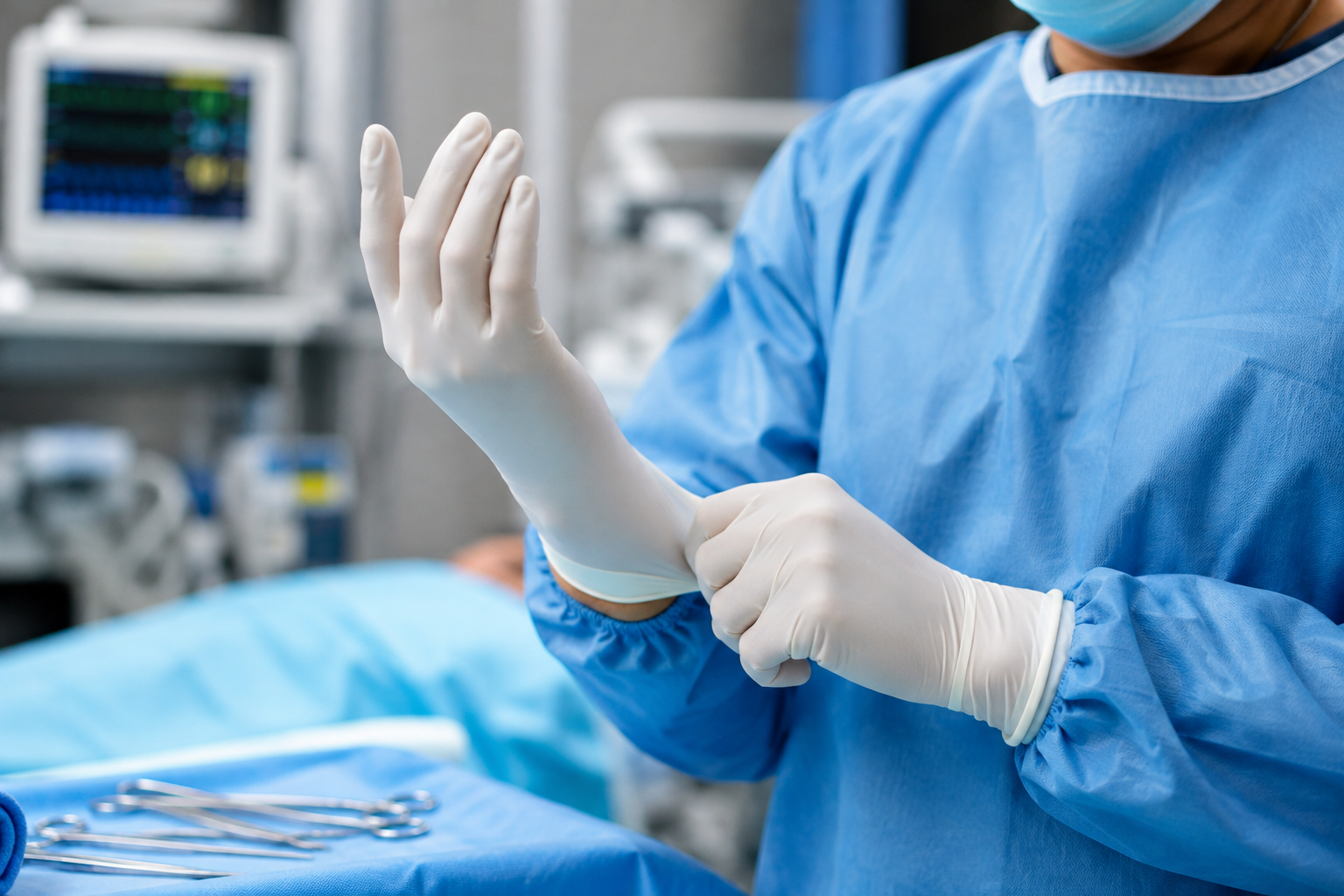
Complete Guide to Personal Protective Equipment (PPE)
Personal Protective Equipment, commonly known as PPE, plays an important role in many professional environments.
From hospitals and laboratories to food businesses, cleaning companies, manufacturing facilities and industrial workplaces, employees may require different types of protective equipment depending on their work.
PPE can include products such as:
- Disposable gloves
- Face masks
- Shoe covers
- Bouffant caps
- Beard covers
- Protective clothing
- Safety eyewear
- Disposable aprons
- Other application-specific protective products
However, PPE should not be selected randomly.
The right products depend on the task, workplace environment, potential hazards and applicable workplace procedures.
What Is PPE?
Personal Protective Equipment refers to equipment or clothing designed to be worn or used by an individual to help reduce exposure to specific workplace hazards.
PPE can provide a practical layer of protection when used correctly as part of a broader workplace safety system.
It is important to remember that PPE is only one part of workplace safety.
Organizations should also consider:
- Engineering controls
- Workplace procedures
- Training
- Hygiene practices
- Equipment maintenance
- Risk assessment
Why Is PPE Important?
Different workplaces expose employees to different conditions.
For example:
A healthcare worker may need disposable gloves and a mask.
A food worker may need gloves, a hair cover and beard cover.
A laboratory worker may require gloves, protective clothing and eye protection.
A cleaning professional may require gloves and additional protective equipment depending on the chemicals and task.
This is why PPE selection should always be based on the actual working environment.
Essential Types of PPE
1. Disposable Gloves
Disposable gloves are among the most widely used PPE products.
They are available in materials such as:
- Nitrile
- Latex
- Vinyl
Gloves can be used for:
- Healthcare
- Food handling
- Cleaning
- Laboratory work
- Beauty services
- Industrial tasks
- General professional use
The correct glove material and thickness should be selected based on the intended application.
2. Face Masks
Disposable face masks are commonly used in healthcare, hospitality, food handling, manufacturing and other professional environments.
Common styles include disposable surgical-style masks and other application-specific masks.
When selecting a mask, buyers should consider:
- Intended application
- Fit
- Construction
- Number of layers
- Ear-loop design
- Packaging
- Product specifications
Avoid choosing masks purely based on appearance.
3. Bouffant Caps
Bouffant caps are lightweight disposable head covers commonly used in environments where hair containment and workplace hygiene are important.
They are frequently seen in:
- Hospitals
- Clinics
- Laboratories
- Food processing
- Pharmaceutical environments
- Manufacturing facilities
- Clean working areas
Their elastic edge allows the cap to fit around the head while containing hair.
4. Beard Covers
Beard covers are commonly used in environments where facial hair needs to be contained.
Typical applications include:
- Food preparation
- Food processing
- Pharmaceutical environments
- Laboratories
- Healthcare
- Manufacturing
They are generally lightweight and designed for disposable use.
5. Shoe Covers
Disposable shoe covers are used to help minimize the transfer of dirt and contaminants through footwear.
They can be useful in:
- Healthcare facilities
- Laboratories
- Clean environments
- Food processing
- Construction-related indoor work
- Professional cleaning
Shoe covers come in different materials and designs, so product selection should be based on the environment and intended use.
6. Protective Apparel
Protective apparel can include:
- Disposable gowns
- Coveralls
- Aprons
- Sleeves
- Protective clothing
The right type depends heavily on the workplace application.
Healthcare, laboratories and industrial environments may have very different requirements.
7. Protective Eyewear
Protective eyewear can help protect the eyes from workplace hazards where eye protection is required.
Depending on the application, products may include:
- Safety glasses
- Protective goggles
- Specialized eyewear
Eye protection should fit properly and be suitable for the identified workplace hazard.
PPE by Industry
Healthcare
Healthcare facilities may commonly require:
- Examination gloves
- Surgical gloves
- Face masks
- Bouffant caps
- Shoe covers
- Protective gowns
- Other specialized PPE
The exact requirements depend on the role and clinical procedure.
Food & Hospitality
Food businesses often use:
- Disposable gloves
- Hair nets
- Bouffant caps
- Beard covers
- Face masks
- Disposable aprons
The objective is to support established hygiene procedures and minimize unnecessary contamination.
Laboratory
Laboratories may require:
- Nitrile gloves
- Protective eyewear
- Masks
- Protective clothing
- Shoe covers
Specific requirements vary depending on the laboratory’s activities.
Cleaning
Professional cleaning teams may use:
- Nitrile gloves
- Heavy-duty rubber gloves
- Disposable gloves
- Protective clothing
- Masks
- Eye protection
The correct PPE should be determined by the products and tasks involved.
Industrial Workplaces
Industrial PPE requirements vary considerably.
Depending on the task, workers may require:
- Work gloves
- Disposable gloves
- Protective eyewear
- Masks
- Protective clothing
- Shoe protection
Employers should conduct appropriate workplace risk assessments before selecting PPE.
How to Choose PPE for Your Business
Before ordering PPE, ask these questions:
What work is being performed?
Identify the specific tasks employees perform.
What hazards exist?
Understand the risks associated with the environment and materials.
What protection is required?
Determine which PPE is appropriate for those risks.
How frequently is PPE used?
This helps estimate purchasing quantities.
Is PPE disposable or reusable?
Some environments may require disposable products, while others may use reusable equipment.
What sizes are required?
Consider the needs of different employees.
How will PPE be stored?
Products should be stored according to their manufacturer’s recommendations.
Common PPE Purchasing Mistakes
Buying only based on price
The cheapest product is not always the best option for the application.
Ordering the wrong sizes
Poorly fitting PPE can affect comfort and usability.
Ignoring product specifications
Always review the product details before ordering.
Buying too much stock
Excessive inventory can create storage challenges.
Buying too little stock
Running out of essential PPE can disrupt business operations.
Not considering employee usage
Procurement should be based on realistic consumption patterns.
PPE Procurement for Businesses
For hospitals, distributors, factories and other organizations, PPE procurement can become a regular operational requirement.
A professional PPE supplier can make the process easier by providing:
- Multiple product categories
- Consistent product availability
- Bulk purchasing support
- Business-friendly ordering
- Product information
- Dedicated customer support
This is particularly important for organizations that purchase PPE regularly.
Why MR.GLOVE?
MR.GLOVE is focused on providing professional gloves and protective essentials for healthcare, industry, hospitality and everyday professional environments.
Our product range is designed to help businesses source commonly required protective products from one place.
Whether you need disposable gloves for a clinic, masks for a business or protective supplies for a larger organization, MR.GLOVE aims to make procurement simpler.
Final Thoughts
PPE is an important part of many modern workplaces.
However, choosing the right equipment requires more than simply buying a standard kit.
Organizations should consider:
Application + Workplace Risk + Product Specifications + Fit + Usage + Supply Requirements
With the right approach, businesses can create a more organized PPE procurement system while ensuring employees have access to appropriate protective products.
Need PPE for your organization? Explore MR.GLOVE products or contact our team for bulk requirements.